


An inboard engine is a major part of a boat’s propulsion system, and its condition directly affects performance and reliability. Unlike an outboard motor, an inboard engine is installed inside the vessel and works together with components such as the transmission, cooling system, exhaust, shaft, and propeller. When something goes wrong, identifying the source of the problem quickly can help prevent further damage. Boat Work Times helps boat owners address mechanical and technical issues, while understanding the basics of Inboard Engine Repair can help owners recognize warning signs before a breakdown interrupts their time on the water.
How Inboard Engines Differ From Outboards
Inboard engines are installed within the boat rather than mounted externally on the transom. The engine transfers power through a transmission and drivetrain to a propeller located beneath the vessel.
This configuration provides a different set of maintenance requirements. Problems may involve the engine itself, but they can also affect connected systems such as the propeller shaft, transmission, cooling system, exhaust, or fuel delivery components.
Because several systems work together, accurate diagnosis is important when an inboard engine begins to perform differently.
Warning Signs That Deserve Attention
Many engine problems develop gradually rather than causing an immediate breakdown. Paying attention to changes in normal operation can help boat owners identify potential issues earlier.
Common warning signs include:
- Difficulty starting
- Rough or unstable idling
- Loss of power
- Excessive vibration
- Unusual engine noises
- Overheating
- Increased fuel consumption
- Unusual exhaust smoke
- Oil or coolant leaks
- Warning lights or alarms
A single symptom can have several possible causes. Professional inspection can help determine whether the issue originates with the engine or one of its supporting systems.
Overheating Is a Serious Concern
Cooling problems are among the issues that should be investigated promptly. Inboard engines generate significant heat during operation and rely on a properly functioning cooling system to maintain safe temperatures.
Depending on the engine design, cooling problems may involve raw-water intake, pumps, hoses, heat exchangers, thermostats, or internal passages.
A restricted water intake can reduce cooling flow, while a damaged pump may prevent sufficient circulation. If an engine repeatedly runs hotter than normal, continuing to operate it without identifying the cause can increase the risk of expensive internal damage.
Fuel System Problems Can Reduce Performance
An engine needs a consistent and properly controlled fuel supply to operate efficiently. Contaminated fuel, clogged filters, damaged fuel lines, or injector problems can all affect performance.
Fuel problems may appear as hard starting, hesitation during acceleration, unstable idle, or reduced power under load.
Regularly replacing fuel filters and inspecting the fuel system can help reduce these risks. Boat owners should also pay attention to fuel quality, especially when a vessel has been stored for an extended period.
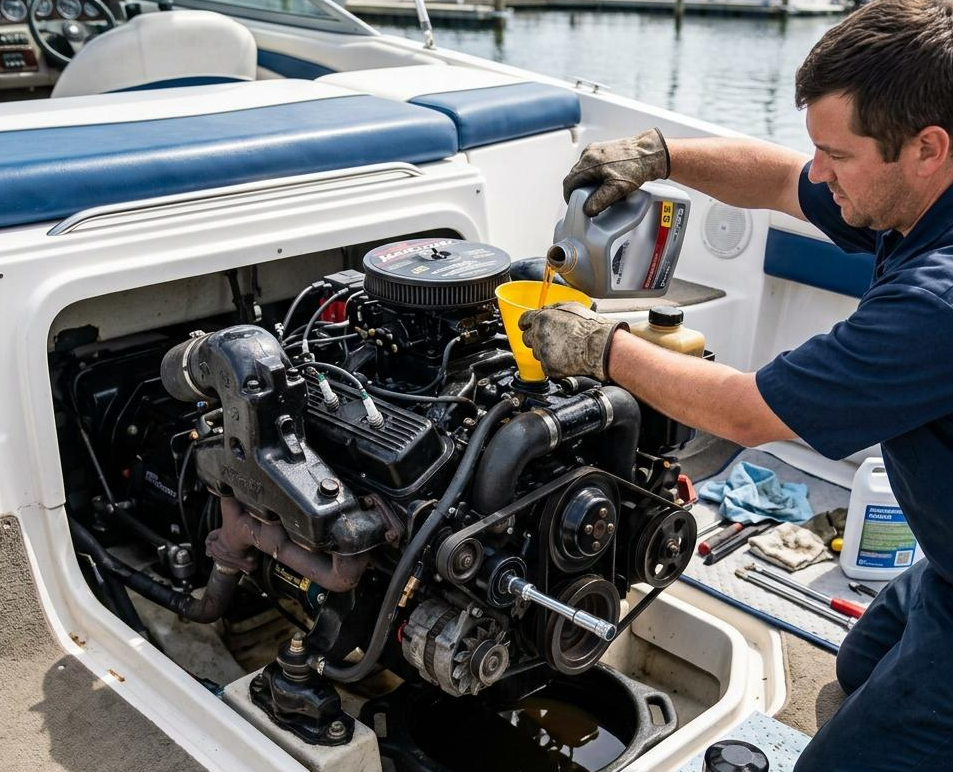
Exhaust Problems Should Not Be Overlooked
The exhaust system plays an important role in removing combustion gases and, in many marine applications, managing heat.
Leaks, damaged hoses, corroded components, or restrictions can create serious problems. Exhaust issues can also allow harmful gases to accumulate in areas where people may be present.
Any unusual exhaust smell, visible leak, excessive smoke, or unexpected change in exhaust behavior should be investigated.
Transmission and Drivetrain Components Matter
An inboard engine does not work independently. Power must travel through the transmission and drivetrain before reaching the propeller.
A transmission problem can produce symptoms such as difficulty shifting, unusual noises, vibration, or reduced propulsion. Similarly, problems with the propeller shaft, coupler, shaft seal, or related components can affect the way the boat moves through the water.
This means that a propulsion problem does not necessarily indicate an internal engine failure. A complete inspection can help separate engine-related problems from drivetrain issues.
Vibration Can Reveal Mechanical Problems
Some vibration is normal during engine operation, but a sudden or increasing vibration should not be ignored.
Possible causes include a damaged propeller, misalignment, worn engine mounts, shaft problems, or drivetrain issues. Internal engine problems can also contribute to unusual vibration.
Because vibration can originate from several areas, technicians may need to inspect the entire propulsion system rather than focusing exclusively on the engine.
Oil and Fluid Checks Are Important
Regular fluid inspections can provide useful information about engine condition. Oil levels should be checked according to the manufacturer’s recommendations, and owners should watch for signs of contamination or unexpected fluid loss.
Leaks around hoses, seals, fittings, or other components should also be investigated.
Changes in fluid appearance can sometimes provide clues about developing problems, but proper diagnosis requires more than visual inspection alone.
Maintenance Helps Prevent Unexpected Repairs
Preventive maintenance is particularly important for inboard engines because access to some components can be more difficult than with an outboard motor.
A maintenance program may include:
- Checking engine oil and filters
- Inspecting belts and hoses
- Checking cooling system components
- Inspecting fuel filters
- Examining exhaust components
- Checking battery and electrical connections
- Inspecting engine mounts
- Checking transmission fluid
- Inspecting the propeller and shaft
- Following the manufacturer’s service schedule
The exact maintenance requirements depend on the engine model and operating conditions.
Preparing an Inboard Engine After Storage
Extended storage can create its own set of problems. Fuel can deteriorate, batteries can lose charge, hoses can age, and moisture can contribute to corrosion.
Before returning a boat to regular use after storage, owners should consider a thorough inspection. Starting the engine without checking basic systems can sometimes turn a storage-related issue into a more serious failure.
A pre-season service can help identify potential problems before the vessel is used for longer trips.
When Professional Repair Is Necessary
Basic inspections and routine maintenance are useful, but more complicated problems require appropriate tools and technical knowledge.
Professional Inboard Engine Repair may be necessary when an engine has persistent overheating, major power loss, abnormal compression, repeated starting problems, unusual internal noises, significant fluid leaks, or transmission-related symptoms.
Accurate diagnosis is especially important because replacing parts without identifying the actual cause can increase repair costs without solving the underlying problem.
Final Thoughts
An inboard engine is part of a larger propulsion system that includes cooling, fuel, exhaust, transmission, shaft, and propeller components. Problems in any of these areas can affect overall boat performance.
Inboard Engine Repair can help identify mechanical and supporting-system issues before they result in major downtime or more extensive damage. Regular maintenance, careful inspections, and attention to unusual symptoms can all contribute to a more dependable boating experience.

