


A reliable outboard engine is essential for safe and enjoyable boating. When the motor begins to behave differently, even a small issue can affect performance, fuel efficiency, and reliability on the water. Boat owners who notice unusual sounds, starting problems, overheating, or inconsistent power should investigate the cause before a minor fault develops into a major repair. For professional marine service and practical solutions, Boat Work Times helps boat owners address a wide range of mechanical and technical problems. Understanding when Outboard Engine Repair may be necessary can also help owners avoid unexpected downtime during the boating season.
Common Signs of an Outboard Engine Problem
Outboard engines can develop different symptoms depending on their age, operating conditions, maintenance history, and specific mechanical components.
Some warning signs are easy to recognize, while others may appear gradually. Common symptoms include:
- Difficulty starting the engine
- Loss of acceleration or top-end power
- Rough or inconsistent idling
- Excessive smoke
- Unusual engine noises
- Overheating
- Poor fuel economy
- Excessive vibration
- Warning alarms or dashboard indicators
- The engine stalling while underway
Any significant change in normal engine behavior deserves attention. Continuing to operate an engine with an unresolved problem can sometimes cause additional damage.
Starting Problems Should Not Be Ignored
A motor that suddenly becomes difficult to start may have an issue with the fuel system, ignition system, battery, electrical connections, or starting mechanism.
For example, a weak battery can prevent the starter from turning the engine at the required speed. Corroded electrical connections can create additional resistance and cause intermittent starting problems.
Fuel-related issues are also common. Old gasoline, contaminated fuel, clogged filters, or problems with fuel delivery can prevent an engine from receiving the correct fuel mixture.
Because several different problems can produce similar symptoms, proper diagnosis is more useful than replacing individual components based on guesswork.
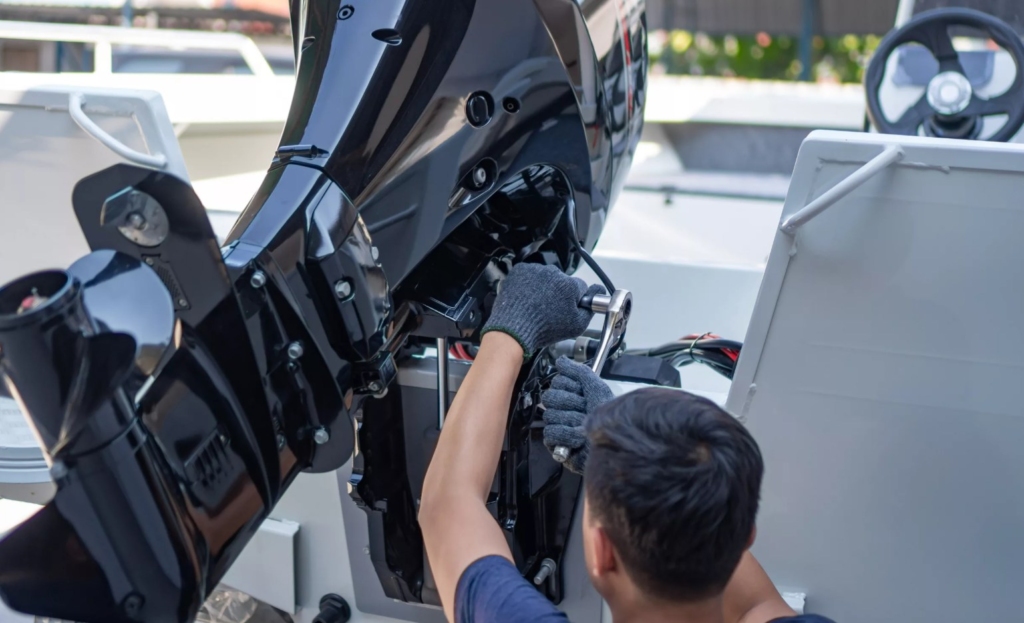
Loss of Power Can Have Several Causes
When an outboard engine no longer reaches its normal operating speed, boat owners may notice slower acceleration and reduced performance.
A restricted fuel supply can limit engine power, while damaged spark plugs or ignition components can interfere with combustion. Problems with the propeller can also affect performance. A damaged or incorrectly sized propeller may prevent the engine from operating within its intended RPM range.
Other potential causes include restricted air intake, injector problems, compression issues, or mechanical wear inside the engine.
A professional inspection can help identify whether the problem is related to fuel delivery, ignition, propeller performance, or internal engine components.
Overheating Requires Immediate Attention
An overheating engine should never be treated as a minor inconvenience. Outboard motors rely on a cooling system to maintain safe operating temperatures.
A damaged water pump, blocked cooling passage, restricted intake, or insufficient water flow can cause engine temperature to rise.
If an engine begins overheating, continuing to run it can result in serious internal damage. Depending on the design of the motor, excessive heat may affect components such as pistons, cylinders, gaskets, and other internal parts.
Regular inspection of the cooling system can help identify problems before they become more expensive.
Why Regular Maintenance Matters
Preventive maintenance is one of the most effective ways to reduce unexpected engine problems. Outboard motors operate in a demanding environment where saltwater, moisture, vibration, heat, and debris can affect mechanical and electrical components.
Routine maintenance may include:
- Inspecting fuel lines and filters
- Checking engine oil where applicable
- Inspecting spark plugs
- Checking battery connections
- Inspecting the cooling system
- Examining the propeller
- Checking steering and control components
- Inspecting belts and other serviceable parts
- Following the manufacturer’s maintenance schedule
Maintenance intervals vary between engines, so owners should follow the specifications provided for their particular model.
Electrical Problems Can Affect Engine Performance
Modern outboard engines often depend on electrical systems for starting, ignition, fuel injection, sensors, and electronic controls. As a result, an engine problem is not always purely mechanical.
Corrosion is a common concern in marine electrical systems. Moisture and salt can contribute to corrosion at battery terminals, connectors, grounds, and other electrical connections.
Intermittent electrical problems can be particularly difficult to diagnose because the engine may operate normally one moment and develop a fault later.
During Outboard Engine Repair, technicians may need to inspect electrical connections, test voltage, check grounds, and use diagnostic equipment to identify electronic faults.
Propeller Problems Should Also Be Considered
The propeller is directly responsible for converting engine power into thrust, so its condition has a major effect on boat performance.
A bent, damaged, or improperly selected propeller can cause vibration, poor acceleration, or abnormal engine RPM. Even minor propeller damage can affect the way the boat moves through the water.
Boat owners should inspect the propeller regularly for dents, cracks, fishing line, and other damage. A damaged propeller should be evaluated before continued use.
When Professional Repair Is Necessary
Some basic maintenance tasks can be performed by experienced boat owners, but more complex problems require professional diagnosis.
Professional service may be appropriate when the engine has persistent starting problems, overheating, major power loss, unusual internal noises, repeated warning alarms, or significant fuel system issues.
Attempting to repair complex engine components without the correct tools or technical knowledge can sometimes make the problem worse. Proper diagnosis also reduces the risk of replacing parts that are still functioning correctly.
Keeping Your Outboard Reliable
A dependable engine starts with regular maintenance and attention to early warning signs. Boat owners should become familiar with how their engine normally sounds, starts, idles, and performs.
Changes in vibration, acceleration, temperature, fuel consumption, or starting behavior can provide useful clues about developing problems.
Addressing those symptoms early can help reduce downtime and potentially limit repair costs. Keeping service records can also make future troubleshooting easier by providing information about previous maintenance and replaced components.
Final Thoughts
Outboard engines are built to operate in demanding marine conditions, but they still require regular inspection and maintenance. Starting difficulties, overheating, loss of power, unusual noises, and electrical problems can all indicate that an engine needs attention.
Professional Outboard Engine Repair can help identify the underlying cause of these symptoms and restore reliable performance when mechanical or electrical problems develop. Regular maintenance, proper operation, and timely diagnosis remain important parts of keeping a boat ready for the water.

