


Spending time on the water should feel relaxing, whether someone is enjoying a short coastal cruise or planning a full day offshore. Yet small details inside a vessel can have a surprisingly large influence on that experience. Seating is one of them. Passengers depend on comfortable cushions, supportive surfaces, and interiors that remain pleasant throughout the trip. Choosing suitable boat seat materials helps owners create a space that balances practical performance with personal style. Professional marine upholstery specialists at Boat Upholstery Fort Lauderdale help boat and yacht owners improve their interiors through customized upholstery solutions.
Seating Influences the Entire Boating Experience
A boat’s seating arrangement affects how people use the available space. Families may need comfortable areas for relaxing together, while fishing enthusiasts often prioritize practical seating that withstands frequent use.
The covering also influences the atmosphere onboard. A coordinated interior can make an older vessel feel more modern, while carefully selected textures can give a new boat a more distinctive appearance.
That is why upholstery decisions should consider both function and design. Replacing a worn cushion with an attractive but unsuitable covering may solve one problem while creating another.
Sun Exposure Changes Material Requirements
Sunlight is one of the most important factors to consider when selecting marine seating. Open decks, bow cushions, and cockpit seats can remain exposed for hours.
Over time, ultraviolet radiation may cause certain materials to fade, weaken, or lose their original appearance. The level of protection varies between products, so owners should examine manufacturer specifications rather than relying on appearance alone.
High-quality marine-grade coverings are designed for demanding outdoor conditions. However, even durable products benefit from protective covers and regular maintenance.
Water Resistance Is Only Part of the Picture
Boat owners naturally pay attention to moisture protection, but water resistance alone does not guarantee long-term performance.
A seating system must also handle humidity, temperature changes, cleaning products, and repeated contact with wet clothing. Seams and cushion construction deserve particular attention because moisture can enter through vulnerable areas.
When comparing boat seat materials, owners should consider how the entire seating system performs, not just the visible surface.
Proper ventilation and complete drying after exposure to water can also help preserve cushions and reduce moisture-related problems.
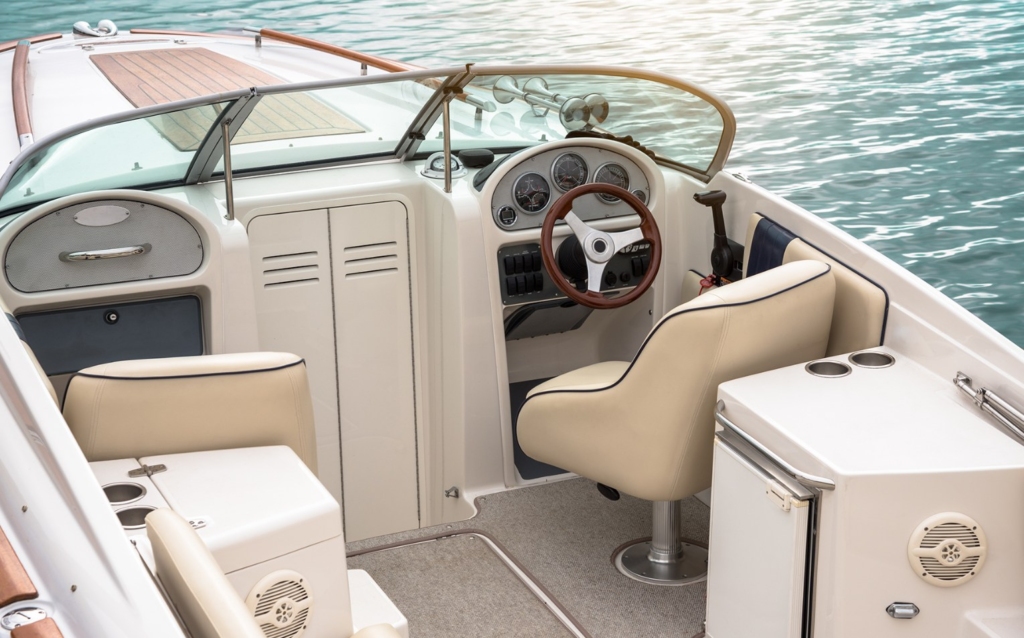
Choosing Between Different Marine Finishes
Marine upholstery comes in many finishes, allowing owners to customize their interiors without overlooking practical requirements.
Marine vinyl remains a popular option because it is available in numerous colors and textures. It also offers convenient cleaning, which is useful for frequently used seating areas.
Specialized marine fabrics provide another design direction. Their suitability depends on their construction, intended application, and resistance to environmental exposure.
Some owners prefer a combination of finishes. For example, smooth central panels can work alongside textured borders to create a more customized appearance.
Cushion Design Deserves Equal Attention
The exterior covering is only one part of a comfortable seat. Internal foam determines how the cushion supports the passenger and maintains its shape.
Old foam can become compressed, uneven, or less resilient. Even premium upholstery may look disappointing when installed over deteriorated cushioning.
During a renovation, owners should evaluate several construction details:
- Foam density and thickness
- Cushion shape and dimensions
- Backrest support
- Resistance to compression
- Drainage and ventilation
- Stitching and seam placement
Addressing these elements together can produce a more consistent result than replacing the covering alone.
Color Can Make a Small Space Feel Different
Many boats have limited interior space, so color selection can influence how open or enclosed the seating area feels.
Cream, white, and light gray can create a brighter appearance. Dark navy and charcoal introduce contrast and can help define individual seating sections.
Two-tone combinations are another useful option. A lighter central panel with darker sides can emphasize cushion shapes without making the design overly complicated.
The most successful boat seat materials complement the flooring, wall panels, and other interior features rather than competing with them.
Maintenance Helps Protect the Investment
Regular care can extend the attractive appearance of marine upholstery. Salt residue, sunscreen, food, and dirt can build up quickly during boating activities.
Owners should wipe surfaces regularly, clean spills promptly, and use products approved for their specific materials. Wet cushions should dry completely before storage, while seams and stitching should receive occasional inspections.
Protective covers can also reduce unnecessary exposure when a boat remains unused.
These simple habits help owners identify early signs of wear and avoid preventable damage.
Final Thoughts
A comfortable boat interior depends on more than attractive colors or expensive finishes. Material performance, cushion construction, environmental exposure, and maintenance all influence the quality of marine seating.
Selecting appropriate boat seat materials allows owners to create interiors that support different boating activities while maintaining a consistent visual style. With careful planning and professional workmanship, seating can become one of the most enjoyable features of a vessel.

