


Marine upholstery plays a crucial role in the overall comfort, appearance, and durability of any boat. Over time, exposure to sun, saltwater, and humidity can significantly affect seating materials and interior surfaces. If you want to keep your vessel in top condition, you can explore professional marine upholstery services here that help restore and maintain boat interiors. Understanding how marine upholstery works and how to care for it properly is essential for every boat owner who values both comfort and long-term performance.
Why marine upholstery is important
Marine upholstery is not just about aesthetics. It directly affects how comfortable and enjoyable your time on the water will be. Seating that is worn, cracked, or faded can quickly reduce the overall experience on a boat.
High-quality marine upholstery provides proper support, improves comfort during long trips, and enhances the visual appeal of the interior. It also plays a protective role by using materials designed to withstand harsh marine conditions.
How marine environments affect upholstery
Boats operate in some of the most demanding environmental conditions. Constant exposure to UV rays, moisture, and salt can gradually damage interior materials. Sunlight is one of the biggest factors, as it causes fading and weakening of surfaces over time.
Saltwater exposure also contributes to material breakdown, especially if surfaces are not cleaned regularly. Moisture can lead to mildew and unpleasant odors if upholstery is not properly maintained. This is why marine upholstery requires specialized materials and care routines compared to regular furniture.
Common materials used in marine upholstery
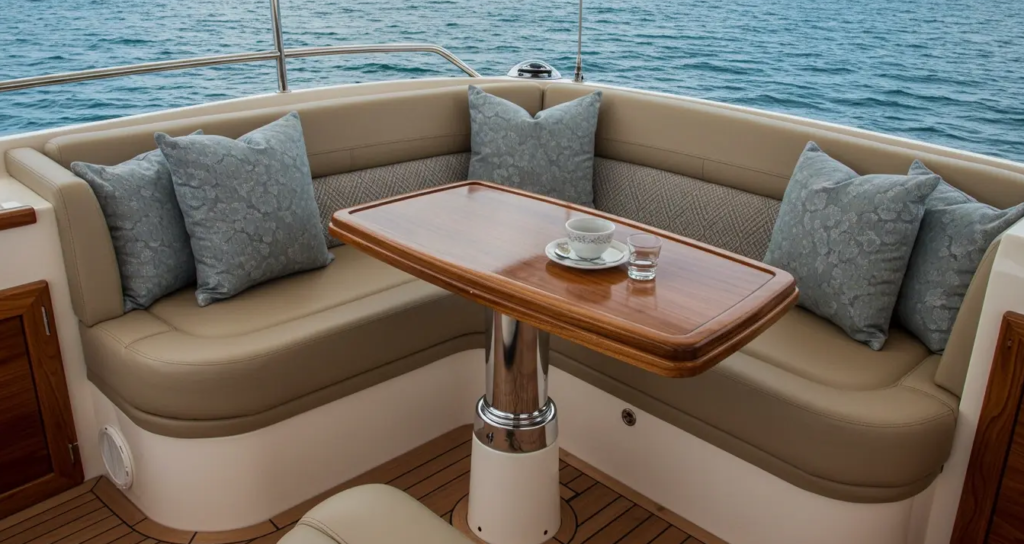
Modern marine upholstery uses materials specifically designed for durability and resistance. The most common options include marine-grade vinyl, synthetic fabrics, and UV-resistant textiles.
Marine vinyl is widely used due to its waterproof properties and ease of cleaning. Synthetic fabrics offer a softer feel while still maintaining resistance to environmental damage. UV-resistant materials help preserve color and prevent cracking, even after long exposure to sunlight.
Signs your marine upholstery needs attention
There are several clear indicators that your boat interior may need maintenance or replacement. Cracking surfaces, fading colors, and loss of cushioning are among the most common signs.
Other issues include persistent odors, visible mold, or reduced seating comfort. When these problems appear, it usually means the upholstery has been significantly affected by environmental conditions and requires professional attention.
Maintenance tips for longer lifespan
Proper care can significantly extend the life of marine upholstery. Regular cleaning with mild, non-abrasive products helps prevent dirt buildup and material damage.
It is also important to rinse surfaces with fresh water after exposure to saltwater. This reduces corrosion and slows down material wear. Allowing upholstery to dry completely before covering or storing the boat helps prevent moisture-related issues.
Simple habits like these can greatly improve the durability and appearance of boat interiors over time.
The value of upgrading marine upholstery
Upgrading marine upholstery is not only about fixing damage. It is also an investment in comfort and long-term boat value. New materials improve both appearance and usability, making time on the water more enjoyable.
In addition, well-maintained interiors can increase resale value. Buyers often pay attention to the condition of seating and interior finishes, making upholstery one of the key factors in overall boat presentation.
Final thoughts
Marine upholstery is an essential part of every boat, influencing comfort, durability, and overall experience on the water. With proper care, quality materials, and timely upgrades, boat owners can ensure their vessels remain in excellent condition for years.
Understanding the importance of marine upholstery helps you make better decisions about maintenance and upgrades, ultimately improving every trip you take on the water.

